

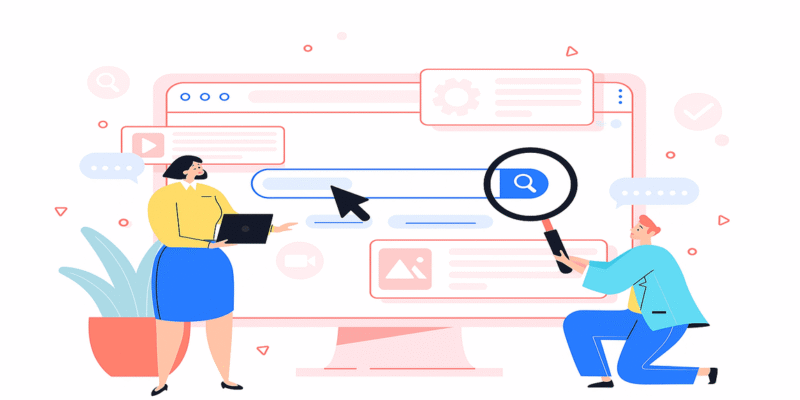
Search engines are evolving from click-first to answer-first. More queries are resolved directly on the SERP — in featured snippets, People Also Ask boxes, AI Overviews, knowledge panels, and voice-assistant replies. That means your content must win the answer slot, not only the click. Below is a practical, SEO-friendly guide to build a content strategy for a zero-click world — focused on being spoken by assistants and read aloud by users, while still driving business outcomes.
Why “zero-click” matters right now?
A growing share of searches end without a click because search interfaces provide instant answers. Recent analyses show a majority of searches now return answers on the results page, and search platforms are increasingly serving AI summaries and voice responses rather than sending users to a website. This shift lowers direct traffic for many sites but creates huge visibility for content that is optimized to be excerpted or read aloud by an assistant.
Core principle: Write to be spoken, not only to be clicked
Writing to be spoken means your content should:
Answer a single clear question in one concise passage (30–50 words) that can be read aloud easily.
Use natural, conversational language and complete sentences.
Organize information into short, scannable blocks (lists, steps, Q&A) that map directly to snippet types.
This mindset helps capture featured snippets, PAA answers, and voice responses — the main drivers of zero-click visibility.
Structure content for spoken answers (snippet-first pattern)
Lead with the answer
Start your section or page with a succinct, direct answer (1–2 sentences). This is the text voice assistants will prefer for spoken replies and featured snippets.
Example: “A hybrid solar inverter combines grid connection with battery backup to provide power during outages.”Follow with a brief explanation
After the one-line answer, add 1–2 short paragraphs that expand the idea with simple language.Use ordered lists for “how-to” and steps
Voice assistants often read steps or lists clearly. Use numbered lists for processes and bullet lists for features/benefits.Add an FAQ block
Create a FAQ section with questions as H3s and direct answers beneath. This is a high-impact location for PAA and snippet capture.
Keywords: target spoken queries & long-tail conversational phrases
Target long-tail, question-style keywords (e.g., “How many solar panels for 5kW home?” or “What is a hybrid inverter used for?”).
Use natural language variations and include short follow-up phrases users might speak (e.g., “best for small houses”, “cost to install in Lahore”).
Map keywords to intent: informational (how/what), navigational (brand/product), transactional (buy/quote). Voice answers prioritize informational intent.
Technical SEO: make your answers extractable
Semantic HTML: Use H2/H3, short paragraphs, and schema markup (FAQ, HowTo, Product). Schema helps search engines understand content structure and increases chances of being surfaced in rich results.
Structured data: Implement
FAQPage,HowTo, andProductschema where relevant.Mobile & Core Web Vitals: Ensure fast loads and mobile friendliness — voice and zero-click queries are heavily mobile/assistant driven.
Clear metadata: Craft concise meta descriptions and title tags but prioritize snippetable content inside the page because search engines may display your on-page answer instead of the meta.
Content types that perform best in zero-click environments
Concise explainers (1 Q → 1 answer)
How-to guides with numbered steps (ideal for spoken directions)
Comparison tables (quick facts read aloud)
FAQ sections (PAA and AI Overviews)
Short videos with captions (some assistants read video descriptions or highlight transcripts)
Writing tips: natural voice + audit checklist
Read your content out loud during editing — if it’s clunky, a voice assistant will stumble too.
Keep answer sentences under 25 words where possible.
Use synonyms and context around the answer so AI summarizers can pull accurate information.
Avoid promotional language in the lead answer — factual, neutral phrasing is more likely to be picked as an excerpt.
Add citations and reputable links — AI Overviews and search engines prefer verifiable sources.
Measuring success: metrics for zero-click content
Don’t rely solely on clicks. Track:
Impressions in Search Console for targeted queries and pages.
SERP feature appearances (featured snippet, PAA, knowledge panel) with a rank-tracking tool.
Voice traffic proxy: Look for branded queries answered in Search Analytics and increases in direct/assisted conversions.
Engagement post-visit: dwell time, scroll depth, micro-conversions (newsletter signups) — these show value even when clicks are fewer.
Tools: Google Search Console, rank trackers (Nightwatch, Ahrefs), and GSC’s performance reports for snippet impressions.
Balancing zero-click visibility and site value
Zero-click visibility can raise brand awareness without a click — but you still need conversions. Combine answer-first content with strategic CTAs:
Place a concise CTA immediately after the short answer (soft CTA like “Learn more” or “Download quick checklist”).
Offer a one-line value exchange (e.g., “For an installation quote, enter your zip code below”) so voice users can be nudged to the site for conversion.
Use micro-conversions (PDF download, email capture) rather than relying only on page views.
Practical template: an SEO-ready answer block
H2: What is a hybrid solar inverter?
Answer (1–2 sentences): A hybrid solar inverter connects your solar panels to the grid and stores excess energy in batteries to provide backup during outages.
Short explanation (1 paragraph): …
How it works (numbered list): 1) Panels convert sunlight -> electricity. 2) Inverter converts DC -> AC. 3) Batteries store excess power.
FAQ: H3: “How much does it cost?” — 1–2 sentence answer.
(Apply HowTo or FAQPage schema to the block.)
Risks & editorial guardrails
AI Overviews and voice assistants may surface inaccurate summaries; keep content factual and updated. Monitor SERPs for hallucinated answers and correct quickly.
Avoid clickbait; assistant algorithms prefer authoritative, factual language.
Final checklist before publishing
✅ Lead answer present within first 50–150 words.
✅ Short, natural sentences for spoken clarity.
✅ Structured HTML and schema markup.
✅ Targeted long-tail, question-style keywords.
✅ FAQ + How-to blocks for PAA and snippet potential.
✅ Fast mobile page with good Core Web Vitals.
✅ Tracking for SERP features and impressions.
Closing thought
In a world where search answers more than it directs, content that reads well aloud will win visibility. Shift from writing for clicks to crafting crisp, authoritative answers that assistants and rapid-scan users can rely on — and pair those answers with smart CTAs and micro-conversions to capture value when users do choose to click.